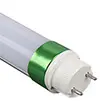
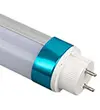
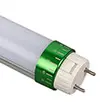
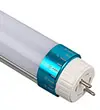
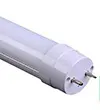
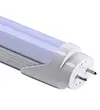
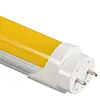
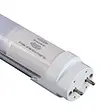
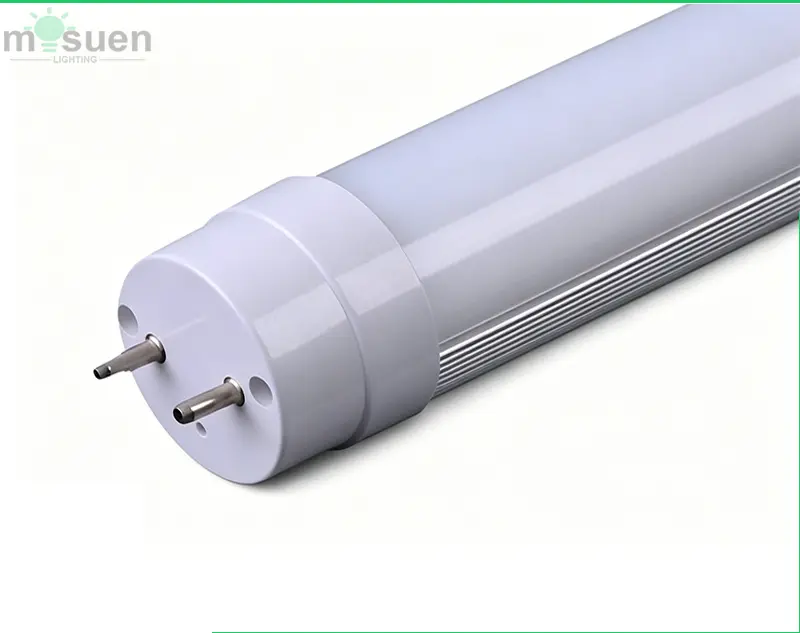
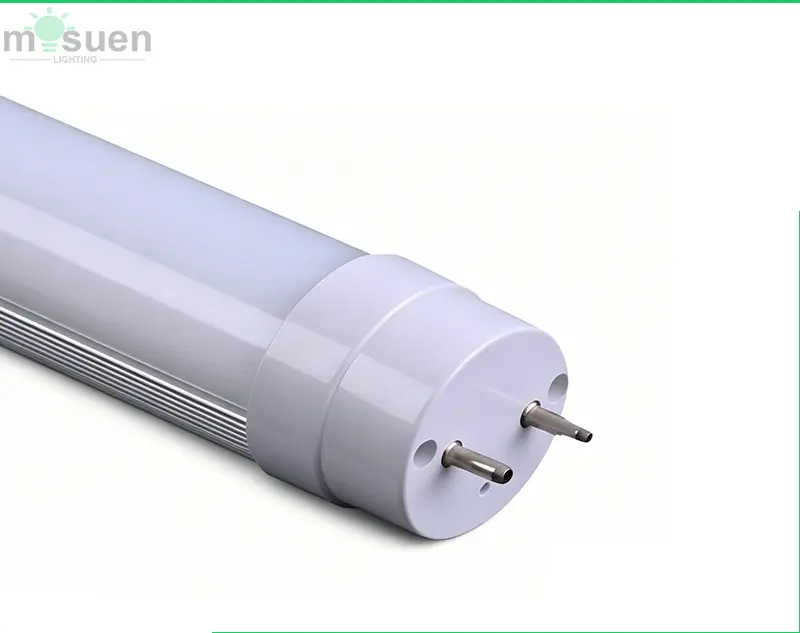
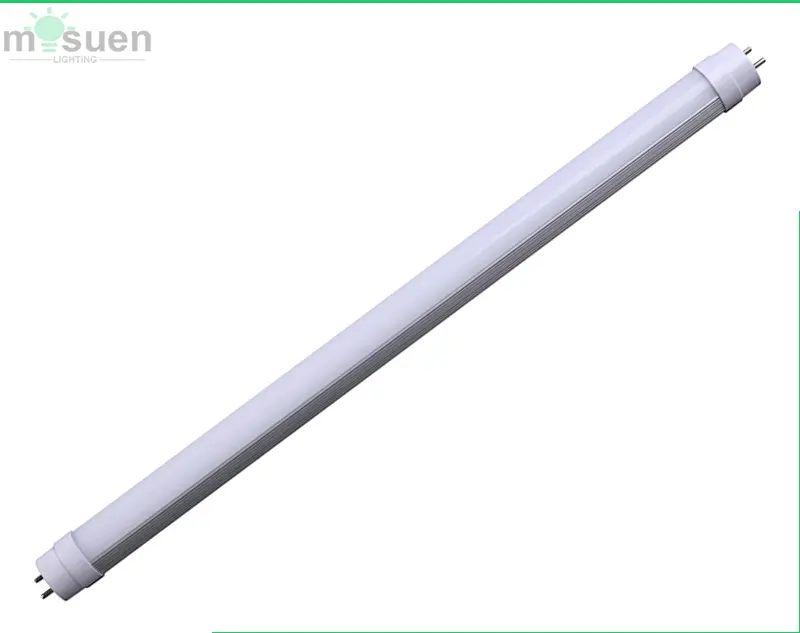
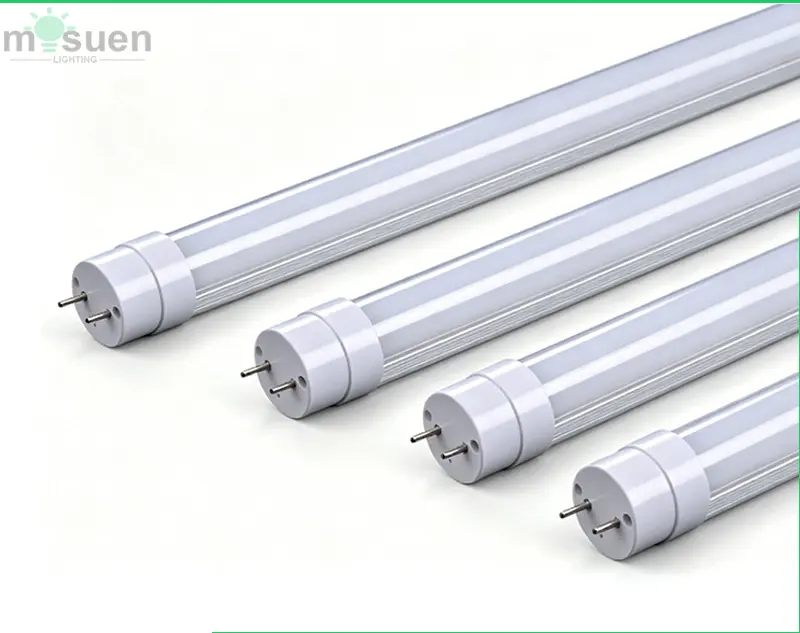
This buyer's guide helps you select a reliable high-efficacy LED tube that truly performs around 200 lumens per watt (lm/W) at 18W for a 4-foot (4ft) T8 fixture size. Whether you are an importer, wholesaler, contractor, or retailer, use the checklist below to avoid underperforming products and procurement surprises.
Why Choose High-Efficacy (200lm/W) 18W 4ft T8 LED Tubes?
High efficacy helps you reduce energy cost while maintaining brightness. When a tube is specified at 200lm/W,
the goal is to deliver strong light output for the same wattage—meaning fewer tubes per room, lower operating cost, and a better payback period for retrofit and new builds.
However, lm/W claims can vary depending on measurement conditions, LED binning, optical design, and driver operation. That’s why you should verify
test reports and ask the supplier how the lm/W figure was validated.
Technical Overview For 200lm/W T8 Tubes
When selecting an LED tube for commercial installations, buyers typically evaluate not only power and length, but also efficiency, flicker behavior, installation compatibility, and expected maintenance cycles. This 1.2m T8 LED tube, 200lm/W 18W is intended to support those real purchasing and engineering needs.
- • Product type: T8 LED tube (1.2 meter)
- • Power: 18W
- • Luminous efficacy: up to 200lm/W (high-efficiency LED performance)
- • Flicker-free design: engineered for stable light output and reduced flicker effects
- • Primary application zones: offices, schools, workshops, supermarkets, corridors, warehouses
Key Features You Must Verify
1) Lumen output and efficacy credibility (lm/W at stated conditions)
Ask for a datasheet that states the luminous efficacy (200 lm/W), input power tolerance, and the test environment. A credible supplier will explain whether the rating is based on system lumens, average testing, and how they manage LED binning to keep real-world performance consistent.
2) CRI (Color Rendering Index) for comfort and accuracy
High-efficacy performance is only part of the user experience. For retail, food-related displays, classrooms, and offices, a higher CRI(Ra80) typically improves perceived color quality. Choose the CRI level based on the space function and customer expectations.
3) Color temperature (CCT) and uniformity
For B2B procurement, consistent CCT across batches reduces complaints and rework costs. Request information about binning strategy and uniformity expectations (including how the supplier controls color point shifts).
4) Flicker and stroboscopic behavior (eye comfort)
Even if lumens are high, visible flicker can cause discomfort and affect productivity. For environments with people performing close work, or where safety perception matters, verify flicker performance and whether the driver supports stable output.
5) Driver quality, PF, THD, and thermal behavior
A stable driver protects performance over time and can impact compliance with EMC requirements. Ask for details on:
power factor (PF), total harmonic distortion (THD), input voltage range, surge protection, operating temperature range, and how the tube manages heat to maintain LED life.
6) Lifespan: L70/L80 reliability and maintenance planning
“Good lumens today, bad lumens later” is a common procurement problem. Request expected lifetime performance (e.g., L70/L80 metrics), and confirm the LED and driver life assumptions used by the supplier.
7) Optics: diffusion, beam angle, and glare control
The diffuser quality affects uniformity and glare perception. A proper design improves comfort and reduces hot spots,
especially when fixtures are used in suspended ceilings or open-office layouts.
B2B/B2C Buying Checklist (Fast and Practical)
Use this checklist to qualify suppliers and reduce the risk of receiving underperforming tubes. Copy it into your internal procurement notes.
- • Performance proof: request lm/W test evidence and confirm it matches the exact tube wattage (18W) and length (4ft).
- • System consistency: ask about LED binning and how the supplier ensures uniform brightness and CCT between batches.
- • Driver identity: request driver brand/model or an equivalent-tier component disclosure (not “generic only”).
- • Electrical compliance: verify PF/THD values and confirm EMC/LVD compliance for your target market.
- • Eye comfort: ask for flicker-related information (especially for schools, offices, retail display areas).
- • Safety approvals: confirm safety certifications relevant to your country (e.g., CE, UKCA, ETL/cETL, UL where applicable).
- • Thermal management: request operating temperature range and reliability approach (materials, heat dissipation design).
- • Warranty: choose a warranty that matches the project risk level; ensure it is clearly stated and supportable.
- • Compatibility mode: confirm whether your existing fixtures require ballast-bypass, direct-wire, or ballast-compatible tubes.
- • Documentation: request datasheet, wiring instructions, and test reports before mass order.
Installation Compatibility: Ballast-Compatible vs Direct-Drive (Bypass)
A common purchasing mistake is selecting the right lumens but the wrong electrical configuration. Before you order,
confirm how your current T8 fixtures are wired and whether you will perform a retrofit.
1) Ballast-compatible tubes (where applicable)
In some retrofit scenarios, buyers prefer tubes designed to work with specific ballast types.
Ask the supplier which ballast types they are compatible with and what wiring instructions apply.
This reduces downtime and installation complexity for contractors.
2) Direct-wire / bypass tubes
For direct-wire configurations, the fixture’s ballast may be bypassed or removed.
Confirm wiring diagrams, installation safety guidance, and the region’s electrical requirements.
3) Always match your project scope
If your goal is a fast replacement with minimal fixture changes, specify “ballast-compatible” and provide your ballast model list.
If you are rebuilding or standardizing wiring, direct-drive tubes often simplify long-term reliability.
Professional Certifications, Testing, and Documentation (E-E-A-T Checklist)
Google and customers both trust products supported by evidence. When evaluating 200lm/W 18W 4ft T8 LED tubes,
request the following documents from your supplier:
- • Safety certifications: Provide certificates relevant to your target markets (e.g., CE/UKCA/ETL/UL depending on region).
- • EMC and LVD compliance reports: Confirm electromagnetic compatibility and electrical safety test results.
- • Photometric reports: Request lumen output, beam angle, and uniformity documentation for accurate brightness planning.
- • Performance reliability evidence: Ask for lifetime projection methodology (L70/L80) and how thermal design supports it.
- • Driver evidence: Provide driver specs, protections overview (e.g., surge/lightning tolerance approach), and operating temperature information.
- • Warranty policy: State warranty duration, coverage terms, and RMA procedure clearly.
Tip for procurement teams: before placing a large order, request a sample and validate brightness, CCT consistency,
flicker perception, and fit in your fixture housings. This “pre-qualification” step significantly reduces return risk.
Frequently Asked Questions (FAQ)
Q1: Does “200lm/W” always mean I will get 200lm/W in my installation?
Yes, you will get a T8 LED Tube with 200lm/W.
Q2: What CRI should I choose?
Choose based on application. Retail and environments where color accuracy matters often benefit from higher CRI options.
For general utility areas, a moderate CRI may be cost-effective—confirm with your end customer requirements.
Q3: Can I use these tubes in existing fixtures with ballasts?
It depends on your tube type and wiring. Confirm whether the tube is ballast-compatible or requires direct-wire/bypass installation.
Provide your ballast model details to the supplier.
Q4: How do I reduce flicker and eye-comfort complaints?
Select drivers designed for stable output and request flicker-related documentation.
For office and classroom use, pre-check with a sample in representative conditions.
Q5: What documents should I request before bulk purchase?
Datasheet, safety certifications, EMC/LVD reports, photometric outputs, and warranty terms.
For projects that require strict compliance, request any additional region-specific documentation early.
Q6: How many lumens will one 18W 4ft tube deliver?
You can estimate system lumens by using the efficacy claim at the rated test condition (200 lm/W × W).
For procurement accuracy, rely on the supplier’s photometric report and request sample verification for your planned fixture spacing.